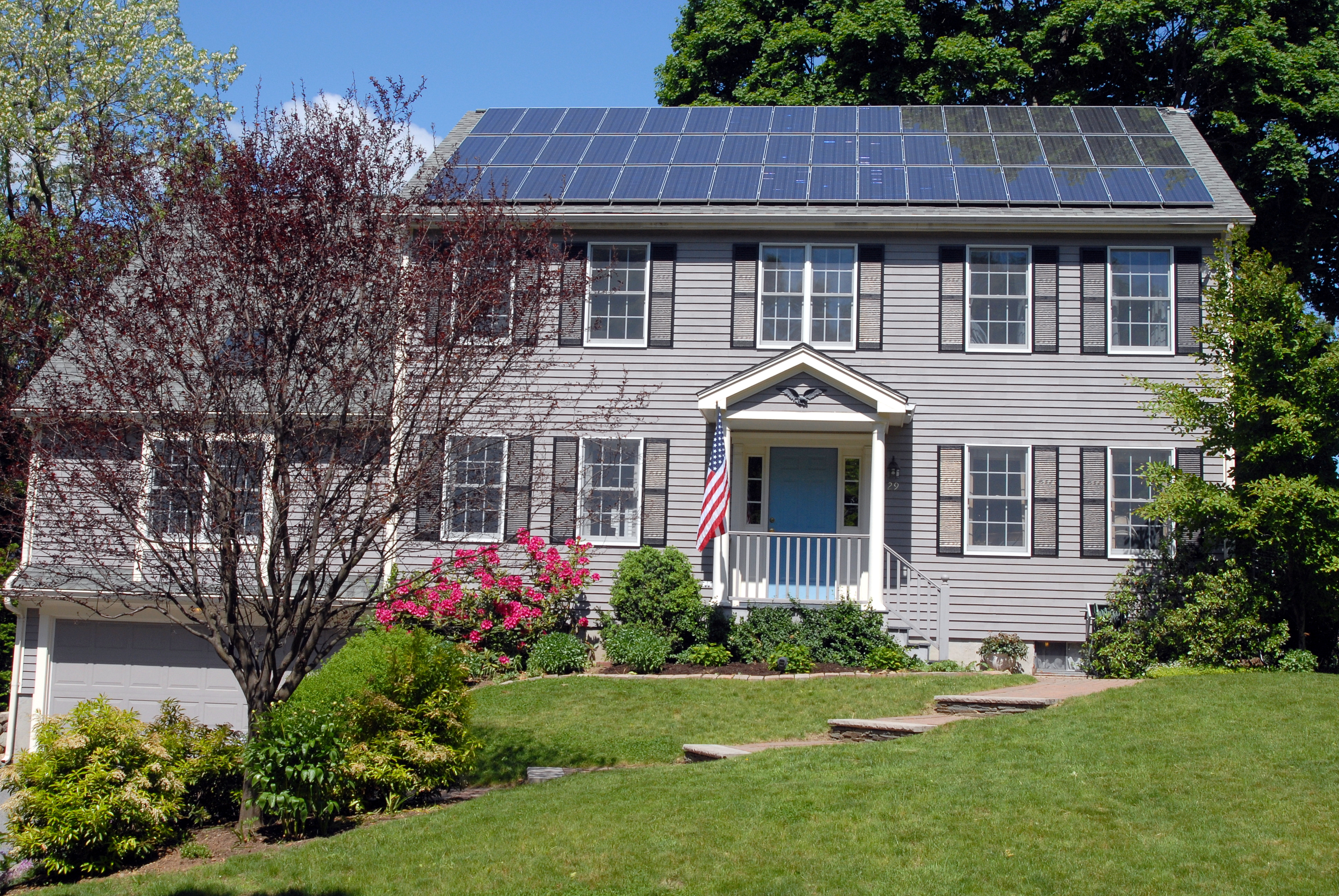
Why Orientation and Angle Matter
A solar panel generates electricity in proportion to the intensity of sunlight striking its surface. Both the compass direction the panel faces (azimuth) and the angle at which it is tilted from horizontal (elevation or tilt angle) determine how much of the sun's daily arc the panel intercepts at peak intensity.
In Canada, the sun travels through the southern sky throughout the year, reaching its highest point at solar noon. A panel aimed directly south and tilted at the latitude angle of its location maximises annual irradiance capture. Deviating from either ideal condition reduces annual yield, though the reduction is not always severe for modest deviations.
Azimuth — Compass Direction
Due south (180° azimuth, measured clockwise from north) is the reference optimum at Canadian latitudes. Panels facing south-southeast (around 150–160°) or south-southwest (200–210°) typically retain 95–99% of optimal annual output, according to irradiance modelling tools such as Natural Resources Canada's RETScreen.
East and west-facing panels capture the morning or afternoon sun respectively and typically yield 15–20% less annually than an equivalent south-facing installation. Some homeowners and installers choose a split east-west configuration on ridged roofs to reduce peak-export spikes at solar noon — relevant in Ontario and BC, where net-metering credits are calculated hourly and mid-day overproduction can exceed the grid import rate.
North-facing roofs in Canada receive direct sunlight only during the hours around midsummer solstice and are generally unsuitable for primary solar array placement. A rear north-facing slope may carry a small supplementary array in some large installations, but this is uncommon in residential contexts.
Tilt Angle — Latitude-Based Guidance
The commonly cited rule of thumb sets the optimal tilt angle equal to the site's latitude. For a location at 45° north (roughly Toronto), a 45° tilt intercepts the most total annual irradiance. In practice, residential roofs have fixed pitches set by the original building design, usually between 18° (a 4:12 pitch) and 45° (a 12:12 pitch).
When a roof's existing pitch falls within 10–15° of the latitude-optimum tilt, it is generally not cost-effective to use additional racking to adjust the angle further. Raised mounting frames add expense, increase wind loading, and may require structural assessment. The incremental energy gain rarely justifies the additional cost for residential installations.
Approximate Optimal Tilt Angles for Canadian Cities
| City | Province | Latitude (approx.) | Optimal Annual Tilt | Winter-Optimised Tilt |
|---|---|---|---|---|
| Vancouver | BC | 49° N | 49° | 55–60° |
| Calgary | AB | 51° N | 51° | 56–61° |
| Regina | SK | 50° N | 50° | 56–60° |
| Winnipeg | MB | 50° N | 50° | 56–60° |
| Toronto | ON | 44° N | 44° | 49–54° |
| Ottawa | ON | 45° N | 45° | 50–55° |
| Montréal | QC | 45° N | 45° | 50–55° |
| Halifax | NS | 45° N | 45° | 50–55° |
| Fredericton | NB | 46° N | 46° | 51–56° |
| Charlottetown | PEI | 46° N | 46° | 51–56° |
Winter-optimised tilt: A steeper tilt — approximately latitude plus 10–15° — maximises winter output, when days are shortest and each kilowatt-hour has higher self-consumption value. It also improves snow shedding. A shallower tilt maximises summer output. For most Canadian homeowners on net-metering tariffs, the latitude angle is a practical annual compromise.
Roof Pitch Conversion Reference
North American roof pitch is typically expressed as rise over 12-inch run (e.g., 6:12 means 6 inches of vertical rise per 12 inches of horizontal run). The following conversions apply to common residential pitches:
| Pitch Notation | Approximate Degrees | Classification |
|---|---|---|
| 3:12 | 14° | Low slope |
| 4:12 | 18° | Low-moderate |
| 5:12 | 23° | Moderate |
| 6:12 | 27° | Moderate |
| 7:12 | 30° | Moderate-steep |
| 8:12 | 34° | Steep |
| 9:12 | 37° | Steep |
| 10:12 | 40° | Very steep |
| 12:12 | 45° | Very steep |
Shading Analysis
Shading from trees, chimneys, adjacent buildings, and rooftop mechanical equipment can reduce annual yield significantly even when the array is otherwise ideally oriented. A shadow covering 10% of a string-wired array under certain conditions can reduce output by more than 10%, because current in a series string is limited by the weakest cell.
Installers typically conduct a shading analysis using solar-path simulation tools or a physical instrument such as a Solar Pathfinder. In Canada, the critical shading window is the late morning to early afternoon arc from October through February, when the sun is lowest in the sky and a mature deciduous tree to the south can cast long shadows even if the summer canopy is not an obstacle.
Mitigating Shading Losses
Several approaches reduce the impact of partial shading on system output:
- Microinverters allow each panel to operate independently. A shaded panel does not pull down the output of unshaded neighbours.
- DC optimisers (also called power optimisers) perform per-panel maximum power point tracking while retaining a central string inverter for DC-to-AC conversion.
- Array segmentation places panels that face different obstructions on separate strings or microinverter branches.
- Selective tree removal or trimming is sometimes pursued by homeowners after a shading analysis identifies specific trees as the primary obstacle.
Flat and Low-Slope Roofs
Some Canadian homes — particularly in urban areas or with contemporary architectural styles — have flat or near-flat roofs (pitches below 3:12). Panels on flat roofs require tilt mounting frames to achieve meaningful tilt angles. Frames typically angle panels at 10–15° minimum for drainage and self-cleaning, with higher angles available for closer-to-optimal orientation.
Tilt frames increase wind loads significantly. A structural engineer's assessment of the roof deck's load-bearing capacity is standard practice before installing tilted arrays on flat commercial-style roofs. In cold-climate provinces, snow accumulation in the space behind tilted panels creates additional loading that structural calculations must account for.
Wind and Snow Load Considerations
Canadian building codes require that structural modifications supporting solar arrays meet local wind and snow loading requirements. In high-wind coastal areas of British Columbia and Atlantic Canada, racking systems must be engineered for corresponding wind pressure values. In high-snowfall regions such as Québec's Laurentians or parts of Newfoundland, snow accumulation loads on panels and racking require structural verification. Most panel manufacturers publish maximum permitted snow and wind loads for their modules; installers should verify that local conditions fall within these limits.
External References
- Natural Resources Canada — RETScreen Clean Energy Tool
- NRCan — Solar Photovoltaic Energy Overview
- Wikipedia — Solar panel